
Advantages of slot-die coating in batteries and supercapacitors
Slot-die coating answers the challenges listed later on this page with pre-metered, recipe-controlled deposition that carries from lab samples to pilot rolls.
Pre-metered mass loading
The pump sets the wet film, so thickness and mass loading follow the recipe rather than the operator. Uniform layers across the full width keep areal capacity, internal resistance, and cycle life consistent.
Adhesion on foils and separators
Fine gap control and primer layers support strong bonds to aluminum and copper current collectors, as well as coated separators. Controlled interfaces limit impedance growth and delamination through calendering and cycling.
Automatic logs for every run
Each run is logged digitally, giving a verifiable record of parameters behind a result. That history makes formulations auditable and speeds up validation and reporting.
Stability for demanding slurries
An enclosed, pre-metered flow path keeps high-viscosity pastes and reactive formulations away from air and contaminants. Controlled drying stabilizes binder distribution and porosity, and reduces solvent exposure in the lab.
Reproducible batch to batch
Recipe-locked parameters replace the run-to-run variability of doctor blade and comma bar methods. The same electrode can be reproduced across sites and over time on comparable equipment.
Scale-up on the same recipe
The coating window transfers from lab samples to continuous pilot rolls without reworking the process. Width, oven length, and line speed become the variables, not the chemistry.
What layers to coat with slot-die
Device architectures vary by energy storage technology, but slot-die coating is a core method for electrodes that need precise mass loading and tight control over film uniformity. In the diagrams below, layers shown in gold — such as cathode and anode coatings, primers, and solid electrolytes — are slot-die coatable; the others are typically current collectors, such as aluminum or copper foils, and separator base films. Target thickness and mass loading are set by ink rheology, pump speed, and drying profile.
Lithium-ion batteries

- Al foil (cathode)
- Primer layer (optional)
- Cathode coating (NMC, LFP or similar)
- Separator film (polymer)
- Anode coating (graphite/carbon-based materials)
- Primer layer (optional)
- Cu foil (anode)
Gold = slot-die coatable layers
Solid-state batteries
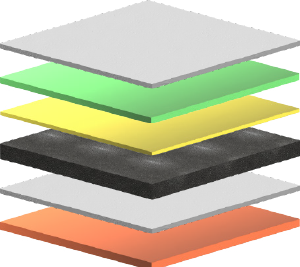
- Al foil (cathode)
- Cathode active layer
- Solid electrolyte
- Anode active layer
- Al/Cu foil (anode)
Gold = slot-die coatable layers
Supercapacitors
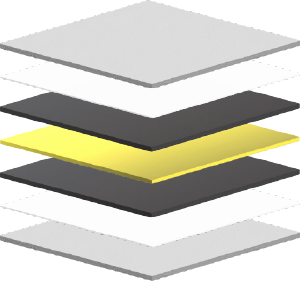
- Al foil (positive current collector)
- Primer / adhesion
- Electrode coating — activated carbon
- Separator base film (microporous polymer)
- Electrode coating — activated carbon
- Primer / adhesion
- Al foil (negative current collector)
Gold = slot-die coatable layers
Typical coating challenges
Developing electrodes for batteries and supercapacitors means holding a coating window while formulations, thicknesses, and formats keep changing

Uniformity and mass loading
Mass loading sets energy density, internal resistance, and cycle life; non-uniform films drive hotspots and early failure

Solvent and drying control
Drying governs binder distribution, porosity, and crack formation, while solvent handling carries VOC compliance and safety demands

Electrode stability
Cracking, delamination, and gas formation have to be prevented for safety and long-term capacity retention

Scale-up without redesign
A coating window that does not transfer to wider, faster lines adds time-to-pilot and risk to the investment

Material waste and cost
Active materials and binders are expensive, so scrap and over-coating raise cost-per-Wh and consume critical materials

Process reproducibility
Moving from doctor blade and comma bar methods to pilot scale often introduces run-to-run variability
Case spotlight: Washington Clean Energy Testbeds (WCET)
Scaling clean energy innovation with precision coating
At the Washington Clean Energy Testbeds (WCET), FOM Technologies’ slot-die coating equipment is accelerating the transition from lab-scale innovation to commercial battery applications.
Initially brought in to support solar cell research, FOM’s modular and precise coating systems quickly proved their versatility in battery R&D. Dr. Devin MacKenzie, Technical Director at WCET, highlights the crucial advantage: “Our FOM flatbed tools have coated more square meters than almost any R&D tool in the world. Their precision and durability allowed us to evolve from optical coatings to thick battery electrodes without missing a beat.”
The lab’s advanced battery initiative now relies on FOM’s alphaSC, moduloR2R and compact moduloR2R systems to develop next-gen battery materials, including solid-state electrolytes, high-viscosity pastes, and multi-layered coatings. With consistent coating quality and low material waste, researchers can rapidly test and validate new formulations—whether for small-scale wearables or EV-format pouch cells.
Machine learning integration adds another layer of value. One WCET researcher developed custom 3-axis air knife systems and in-situ sensors on FOM tools to optimize drying conditions and rapidly iterate new recipes. “There are thousands of possible parameter combinations in battery coating,” the researcher explains. “By combining sensors and AI with FOM’s reliable hardware, we’re dramatically shortening the path from idea to data.”
Why FOM? Slot-die coating offers repeatability across different machines and formats. As another researcher at WCET puts it, “FOM’s interchangeable slot-die heads and intuitive software allow us to scale from early experiments to pilot-scale runs without reengineering the process”.
With FOM’s tools at the center of this transformation, WCET is building a bridge between curiosity-driven research and scalable battery production—empowering the next generation of energy storage technologies.
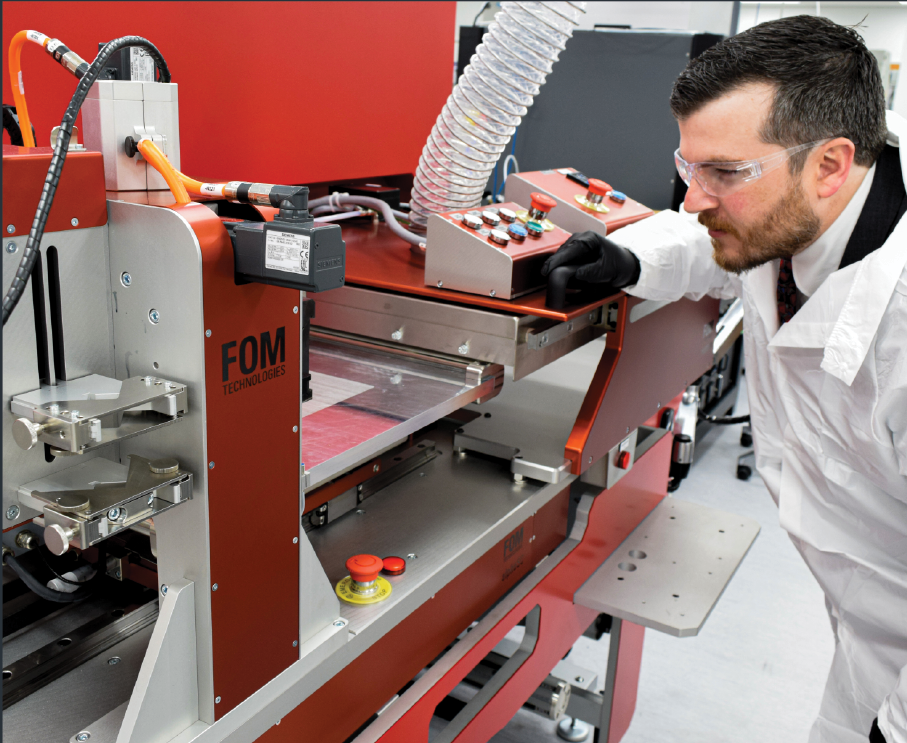
“Using a high-quality slot-die coating tool yields very consistent results. When some of our customers, who might have access to lower-quality tools, seek more consistent outcomes, they often turn to us.”
Phillip Cox, PhD, Program Manager and Senior Staff Scientist at WCET
A solution for every stage of your research
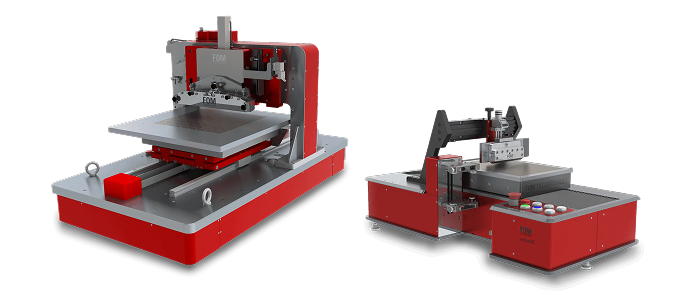
Sheet-based coating
Recipe development on small samples, with fast setup and minimal material use. Glovebox-ready for air- and moisture-sensitive materials.
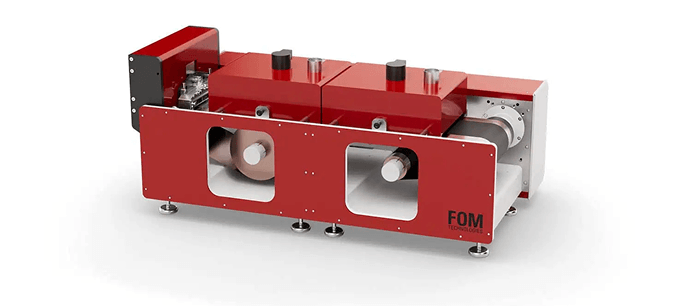
Lab-scale roll-to-roll
The bridge to continuous processing, using the same slot-die head. Longer substrates, controlled drying, and optional in-line metrology.
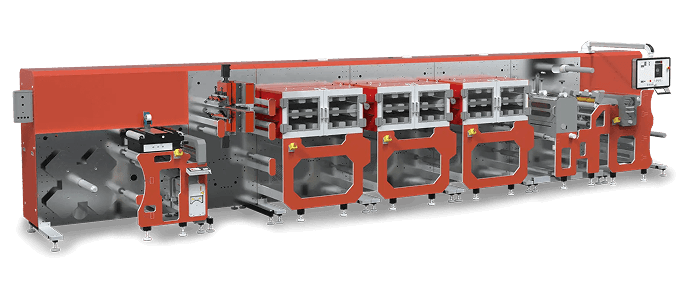
Pilot-scale roll-to-roll
Production-relevant widths and speeds, with modular options that keep your research open-ended. Build pilot data and de-risk manufacturing.

FOM’s Tensor coating software
Turns coating expertise into repeatable, scalable recipes. A clean, guided user interface takes you from setup to run with recipe-based control and storage to reuse coating protocols and test coating parameters in a structured way. The same intuitive workflow spans research tools and pilot lines, helping you scale by width and throughput without reworking your process. Advanced options—such as sequences, drying/profile management, web handling, and tension control.
Why it matters
- Save time with easy setup and reusable recipes.
- Get the same results every time with locked settings and history tracking.
- Scale with ease by using familiar software and protocols as you move from the lab to the pilot line

Expert-led training and research
FOM is staffed by scientists as well as engineers, and that team works with you directly — planning experiments, running samples, and troubleshooting the process. Whether you are new to slot-die coating or refining an established recipe, our application specialists shorten the path from a lab result to a qualified process.
- Research planning: a coating plan built around your material and constraints.
- Live training: private sessions led by a FOM scientist, online or at your site.
- Research services: we coat in the FOM laboratory and return samples with the process data.
- Book a scientist: hourly access to troubleshoot a specific issue.
- Technology demos: see a live coating run and assess it against your own materials.
Training, research services and technical resources are collected on our Science & Learning pages.
Free downloads for battery research
Two free downloads take the topics on this page further. The application insight gives a technical overview of slot-die coating for battery and supercapacitor layers, and the ebook looks at how to carry a coating process from lab to pilot scale.

Get the application insights
Slot-die coating for uniform, reproducible battery and supercapacitor layers
From lithium-ion to solid-state and beyond, energy storage research depends on electrode layers that are uniform, scalable, and reproducible. This application insight explains how FOM slot-die coating helps researchers optimize battery materials, reduce waste, and scale up from lab to pilot.

Download the free ebook
From lab to line: accelerate your battery R&D with scalable slot-die coating technology
The ebook covers how slot-die coating fits into battery research and development, where it reduces cost and material use, and what it takes to carry a process from laboratory experiments toward pilot-scale production. It is aimed at researchers planning the next step for their electrode work.