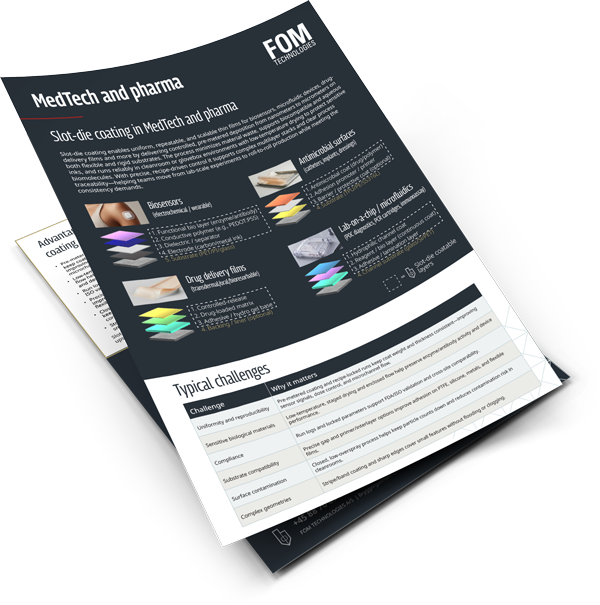
Advantages of slot-die coating in MedTech and pharma
Slot-die coating replaces manual methods with software-controlled deposition, which is what makes a coating process reproducible enough to validate.
Stable pre-metered dosing
Flow, speed, and gap are set on the machine, so coat weight holds steady on small parts and narrow channels. That stability is what reduces signal drift and dosing errors between one device and the next.
Protection of sensitive bio-layers
Low-temperature, staged drying and an enclosed flow path keep biomaterials and drugs away from the heat, solvent exposure, and shear that denature them. Bioactivity survives the coating step rather than being traded against film quality.
Adhesion on inert surfaces
Fine gap control and optional primer or interlayer steps improve adhesion on low-energy substrates such as TPU, silicone, and stainless steel. Interfaces hold through handling and sterilization instead of failing after the fact.
Traceability for validation
Recipe-locked runs are logged automatically, giving you the parameter record a validation package needs. The same recipe reproduces across research and production sites without drift.
Cleanroom-compatible containment
An enclosed, low-overspray process fits cleanroom practice and reduces the contamination risk that open methods carry. Glovebox installation is supported where the chemistry requires it.
Sharp edge and geometry control
Stripe and band coating with defined edges covers micro-features without flooding or clogging channels and vias. Coverage is placed where it is needed rather than applied across the whole part.
What layers to coat with slot-die
Device architectures vary by medical and pharmaceutical application, but slot-die coating is a core method wherever pre-metered functional layers need to be deposited. Drug-loaded thin films, antimicrobial coatings, thin films for biosensors, and coatings for microfluidic devices are among these layers.
Typical coating challenges
A medical device or pharmaceutical product has to clear validation as well as work, and the coating step is where both are decided

Uniformity and reproducibility
Variation in coat weight causes signal drift, dose errors, and unstable microchannel flow, none of which survive device specification testing

Sensitive biological materials
Heat, unsuitable solvents, and the process environment can denature organic molecules and pharmaceutical compounds, and a coating process that damages bioactivity produces a device that does not work

Compliance and records
Without controlled recipes and logged parameters, a process cannot be validated, which blocks clinical and market approval

Substrate compatibility
Low-energy and inert surfaces cause beading and weak adhesion that fails later, after handling or sterilization

Surface contamination
Particles and bioburden produce false results and device failures, so contamination control is not optional in a cleanroom workflow

Complex geometries
Poor edge control floods or clogs channels, vias, and edges, and over-build compromises both accuracy and function
Case spotlight: standardizing high-precision biosensor coating
Holding sub-micron coat weight across multiple sites
Challenge
A biosensor program needed uniform, sub-micron functional films on flexible substrates, reproducible across several sites. Manual methods — spin coating and screen printing — could not hold coat weight or edge quality to the required tolerance.
Approach
The team deployed multiple FOM alphaSC sheet coaters with custom slot-die heads, tailored shim sets, and FOM enclosures for cleanroom use. Running FOM Tensor with recipe-controlled parameters, they iterated quickly on wet and dry thickness, wetting behavior, and stripe geometry without reconfiguring hardware between experiments.
Outcome
The standardized setup held repeatable wet and dry thickness down to sub-micron targets, produced cleaner edges with less scrap, and handled a range of biosensor inks in a fully contained process. Results were consistent between labs, shortening the path from material discovery to device validation.
What was deployed
- FOM alphaSC sheet coater with interchangeable slot-die heads and shims
- Cleanroom-compatible FOM enclosures
- Recipe-based workflows with logged parameters

A solution for every stage of your research
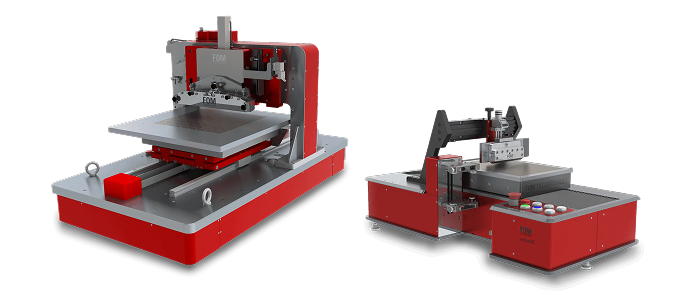
Sheet-based coating
Recipe development on small samples, with fast setup and minimal material use. Glovebox-ready for air- and moisture-sensitive materials.
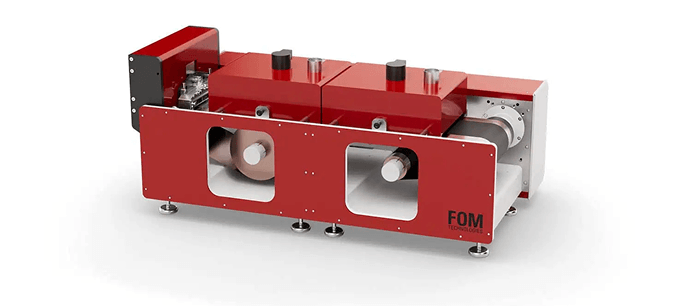
Lab-scale roll-to-roll
The bridge to continuous processing, using the same slot-die head. Longer substrates, controlled drying, and optional in-line metrology.
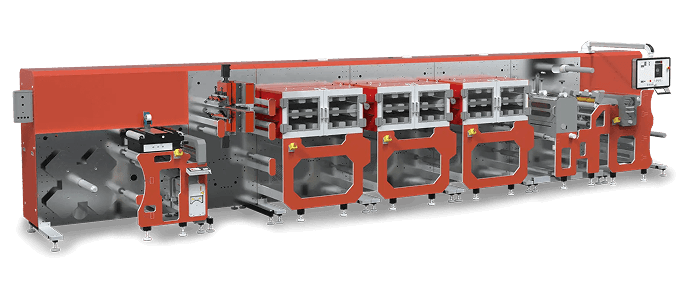
Pilot-scale roll-to-roll
Production-relevant widths and speeds, with modular options that keep your research open-ended. Build pilot data and de-risk manufacturing.

FOM’s Tensor coating software
Turns coating expertise into repeatable, scalable recipes. A clean, guided user interface takes you from setup to run with recipe-based control and storage to reuse coating protocols and test coating parameters in a structured way. The same intuitive workflow spans research tools and pilot lines, helping you scale by width and throughput without reworking your process. Advanced options—such as sequences, drying/profile management, web handling, and tension control.
Why it matters
- Save time with easy setup and reusable recipes.
- Get the same results every time with locked settings and history tracking.
- Scale with ease by using familiar software and protocols as you move from the lab to the pilot line

Expert-led training and research
FOM is staffed by scientists as well as engineers, and that team works with you directly — planning experiments, running samples, and troubleshooting the process. Whether you are new to slot-die coating or refining an established recipe, our application specialists shorten the path from a lab result to a qualified process.
- Research planning: a coating plan built around your material and constraints.
- Live training: private sessions led by a FOM scientist, online or at your site.
- Research services: we coat in the FOM laboratory and return samples with the process data.
- Book a scientist: hourly access to troubleshoot a specific issue.
- Technology demos: see a live coating run and assess it against your own materials.
Training, research services and technical resources are collected on our Science & Learning pages.
Get the application insights
Download our free application insights to see how precision coating supports the next generation of medical devices
From biosensors to drug-delivery films, slot-die coating produces uniform, reproducible thin films at the consistency a clinical validation package demands. This application insight sets out where the process fits across diagnostics, antimicrobial surfaces, drug delivery, and microfluidics, and what it takes to carry a coating recipe from lab samples to pilot scale.