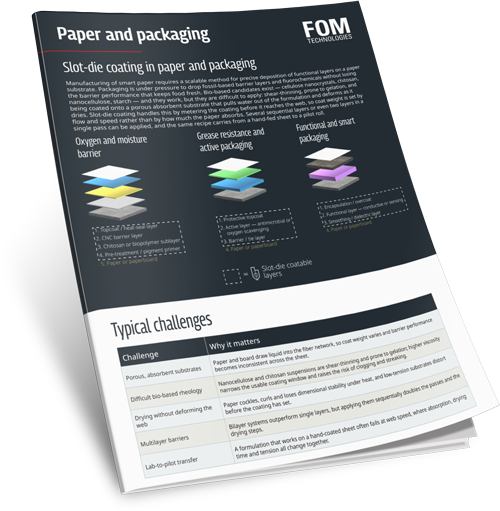
Advantages of slot-die coating in paper and packaging
Slot-die coating meters the fluid before it reaches the web, which takes the substrate's absorbency out of the equation and makes coating weight something you set rather than something you discover.
Nothing lost to overspray
There is no overspray and little dead volume, which matters when coating an expensive material. Pre-treated and pigment-coated grades benefit further, since less coating is lost into the sheet.
Drying as a controlled step
Paper cockles and curls when heated too quickly, and low-tension webs distort before the coating sets. Integrated IR and hot-air modules with programmable ramps let drying be tuned to the substrate rather than applied as a fixed condition.
Absorbency stops being the variable
Paper and board pull liquid into the fiber network, so with open coating methods the substrate decides how much coating stays on the surface. Slot-die coating meters the fluid first, which means coating weight follows flow rate and line speed instead.
Formulations that resist coating
Nanocellulose suspensions are shear-thinning with complex rheology, and the usable coating window narrows as viscosity rises. A closed, pre-metered flow path avoids the dripping and starvation that open methods hit at the edges of that window, and PEEK heads give the chemical resistance aqueous biopolymer systems need.
Bilayers without the second pass
Published work shows that cellulose nanocrystal and chitosan or chitin bilayers give substantially better oxygen barrier than either material alone. Applying them sequentially means two coating steps and two drying steps; a dual-layer slot-die head coats both at once.
A path from sheet to pilot
Formulation screening on small sheets, then sheet coating with drying and recipe control, then compact and full pilot roll-to-roll lines with tension control and modular ovens. The same coating principle throughout, so a working formulation does not need re-developing at each step.
What layers to coat with slot-die
Layer stacks vary by specific defense application, but slot-die coating is the standard for functional films that benefit from pre-metered deposition and controlled drying. In the diagrams below, layers shown in gold — such as lossy absorbers, dielectrics, and sensing layers — are slot-die coatable; others are typically rugged substrates or metallic contacts. Thickness ranges depend on ink rheology, wet gap, speed, and drying profile.
Oxygen and moisture barrier

- Topcoat / heat-seal layer
- CNC barrier layer
- Chitosan or biopolymer sublayer
- Pre-treatment / pigment primer
- Paper or paperboard
Gold = slot-die coatable layers
Grease resistance and active packaging

- Protective topcoat
- Active layer — antimicrobial or oxygen scavenging
- Barrier / tie layer
- Paper or paperboard
Gold = slot-die coatable layers
Functional and smart packaging
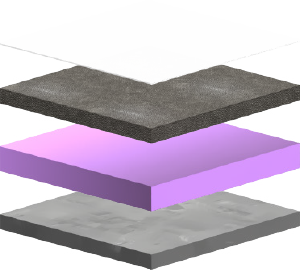
- Encapsulation / overcoat
- Functional layer — conductive or sensing
- Smoothing / dielectric layer
- Paper or paperboard
Gold = slot-die coatable layers
Typical coating challenges
Packaging has to drop fossil-based barrier layers and fluorochemicals without losing the barrier performance that keeps food fresh. Bio-based alternatives perform well, but they are hard to apply

Porous, absorbent substrates
Paper and board draw liquid into the fiber network, so coating weight varies and barrier performance becomes inconsistent across the sheet

Difficult bio-based rheology
Nanocellulose and chitosan suspensions are shear-thinning and prone to gelation, so higher viscosity narrows the coating window and raises the risk of clogging and streaking

Drying without deforming the web
Paper cockles, curls, and loses dimensional stability under heat, and low-tension substrates distort before the coating has set

Multilayer barriers
Bilayer systems outperform single layers, but applying them sequentially doubles the passes and the drying steps

Lab-to-pilot transfer
A formulation that works on a hand-coated sheet often fails at web speed, where absorption, drying time, and tension all change together

Replacing fluorochemicals
Regulatory pressure is removing PFAS-based grease barriers faster than drop-in replacements are being qualified, so the coating process has to accommodate formulations that are still changing
A solution for every stage of your research
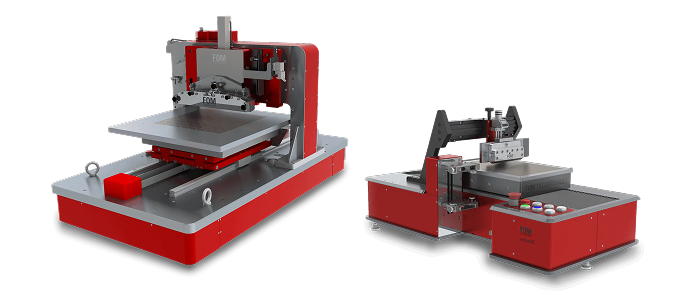
Sheet-based coating
Recipe development on small samples, with fast setup and minimal material use. Glovebox-ready for air- and moisture-sensitive materials.
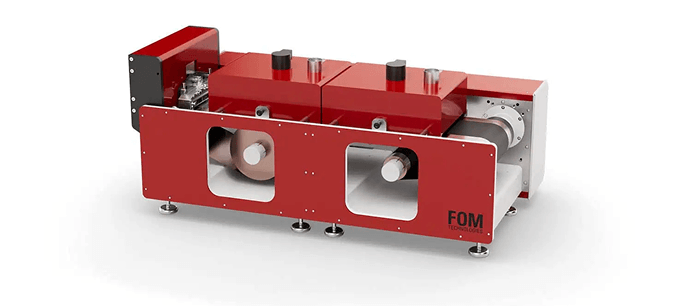
Lab-scale roll-to-roll
The bridge to continuous processing, using the same slot-die head. Longer substrates, controlled drying, and optional in-line metrology.
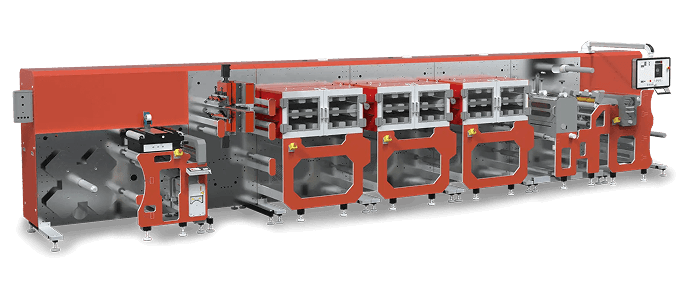
Pilot-scale roll-to-roll
Production-relevant widths and speeds, with modular options that keep your research open-ended. Build pilot data and de-risk manufacturing.

FOM’s Tensor coating software
Turns coating expertise into repeatable, scalable recipes. A clean, guided user interface takes you from setup to run with recipe-based control and storage to reuse coating protocols and test coating parameters in a structured way. The same intuitive workflow spans research tools and pilot lines, helping you scale by width and throughput without reworking your process. Advanced options—such as sequences, drying/profile management, web handling, and tension control.
Why it matters
- Save time with easy setup and reusable recipes.
- Get the same results every time with locked settings and history tracking.
- Scale with ease by using familiar software and protocols as you move from the lab to the pilot line

Expert-led training and research
FOM is staffed by scientists as well as engineers, and that team works with you directly — planning experiments, running samples, and troubleshooting the process. Whether you are new to slot-die coating or refining an established recipe, our application specialists shorten the path from a lab result to a qualified process.
- Research planning: a coating plan built around your material and constraints.
- Live training: private sessions led by a FOM scientist, online or at your site.
- Research services: we coat in the FOM laboratory and return samples with the process data.
- Book a scientist: hourly access to troubleshoot a specific issue.
- Technology demos: see a live coating run and assess it against your own materials.
Training, research services and technical resources are collected on our Science & Learning pages.
Get the application insights
Download our free application insights to see how precision coating supports bio-based barriers
Cellulose nanocrystals, chitosan, nanocellulose, and starch can replace fossil-based barrier layers, but they are difficult to apply evenly onto a substrate that absorbs water and deforms as it dries. This application insight sets out the barrier and functional layer builds slot-die coating suits, the challenges paper and board present, and what published work shows about bilayer performance.