What is slot-die coating?
Slot-die coating is a highly scalable technique for rapidly depositing thin and uniform films with minimal material waste and low operational costs. Slot-die coating technology is used to deposit a variety of liquid chemistries onto both rigid and flexible substrates. Rigid substrates include materials such as glass and silicon wafers, while flexible substrates include metal foils, polymer foils, and membranes. This is achieved by precisely metering the process fluid and dispensing it at a controlled rate while the coating die is moved relative to the substrate.
Industrial origins
Slot-die coating was originally patented by Eastman Kodak Co. in 1951 for producing photographic films. It has since become an essential tool for precision coating applications across industries, on the strength of its reliability, high throughput, and minimal waste.
Today, slot-die coating plays a pivotal role in solar energy harvesting and energy storage. It is widely used in the fabrication of perovskite and organic solar cells, enabling efficient and scalable renewable energy solutions — and, in energy storage, it is indispensable in manufacturing lithium-ion, solid-state, sodium-ion and flow batteries.
Beyond energy, slot-die coating continues to find use in diverse industries: LCD displays, touchscreens, chemical release patches, food packaging, multi-layer ceramic capacitors and more. That range is what keeps it at the forefront of materials science and industrial development.
Why slot-die at a glance
Researchers choose slot-die for consistent data, short iteration cycles, and a straightforward path from small samples to continuous processing.
- Thickness control into sub-micron ranges
- High material utilization through closed delivery
- Direct transfer from sheet to roll-to-roll
- Works across a wide viscosity window and substrate range
Precise
Slot-die is a pre-metered process with controlled flow and a defined gap. Thickness is set by pump rate and web speed, delivering uniform films with clean edges and smooth interfaces.
Reproducible
A closed-flow manifold and stable meniscus reduce environmental and operator variability. Recipes transfer between runs and users, producing consistent morphology, comparable data, and faster iteration.
Scalable
The same physics apply from small samples to continuous roll-to-roll. Pre-metered delivery preserves thickness control as width and speed increase, so pilot trials are a direct extension of lab work.
Versatile
From low-viscosity inks to high-solids slurries, slot-die supports diverse chemistries. It enables intermittent or continuous patterns, integrates with inline drying and metrology, and fits fume hoods or gloveboxes — for defense, MedTech, energy and more.
Precision hardware
Slot-die systems achieve their coatings by delivering the coating fluid through a precisely machined delivery component — the slot-die head. Ink entering the head is first split into a hollow cavity machined into one of the slot-die plates. This cavity, the ink reservoir or distribution chamber, is then guided downwards from the reservoir to the coating edge of the head by the shim, whose cutout shape sets the coating width.
A fully assembled slot-die head consists of several key components: the front plate, back plate, shim, and meniscus guide. Front and back plates are the exterior metal blocks that receive the ink from the delivery system and secure all of the slot-die head components in place. The shim and meniscus guide are the two thin sheets of metal between the front and back plates that serve to guide the ink to the coating edge.

How film thickness is controlled
The interior design of a slot-die head can vary. Typically, ink is pumped into the system via tubing connected to an inlet on either the front or top of the head, and first fills into a hollow cavity machined into one of the slot-die plates. From there it is guided downwards from the reservoir to the coating edge of the head by the shim, whose cutout shape determines the coating width — and, along with the coating gap, sets the geometry that governs the film. A meniscus guide may sometimes be added to stabilize the fluid meniscus between the head and the moving substrate.
A key benefit of slot-die coating is its pre-metered nature: the wet film thickness (t) can be calculated directly from the pump rate (q), the coating width (w), and the coating speed (u).
t = q / (w · u)
Unlike self-metered techniques, where the height of the slot-die head does not physically control the thickness of the coated layer, in slot-die coating the wet layer thickness is entirely determined by the volume of ink applied to the substrate, divided by the area over which the ink is coated. This affords a highly flexible, contact-free coating process, with additional benefits such as closed fluid delivery and wide viscosity compatibility. Together these give significant process control and scaling advantages over blade coating, bar coating and spin coating.

The defect-free coating window
Coating thickness is the primary parameter of interest for users of slot-die coating equipment. Quality is the parameter that has to be earned. The quality of a coating is generally discussed in terms of the coating window — the set of possible combinations of key process parameters, such as pump rate, coating speed and gap-to-thickness ratio, that support a stable coating meniscus and so avoid defects in the final coated layer.
In practical terms, achieving a defect-free film at the desired thickness is often a matter of balancing the ink pump rate, substrate motion speed, and slot-die head height against each other. The boundaries of the stable coating window can also be influenced by the position of the slot-die relative to the substrate, as well as by the nature of the inks and substrates being used. Viscosity, surface tension, and surface energy are just a few of the material properties that can be controlled and optimized alongside high-quality slot-die hardware and motion systems to achieve ultra-thin films with outstanding uniformity.
Preventing common defects
Stable pre-metered delivery helps avoid ribbing, streaks, air entrainment and edge beading. We work with users to find the right gap-to-thickness ratio, coating speed and drying profile, and advise on edge control and meniscus stability.

Where slot-die coating is used
Slot-die coating works with almost any functional ink, so the applications below are a selection rather than a complete list. Tell us what you are coating and our Science & Learning team will find a solution together with you.

Batteries and supercapacitors
Lock mass loading and thickness across Li-ion, solid-state, and supercapacitor electrode builds.
Solar cells
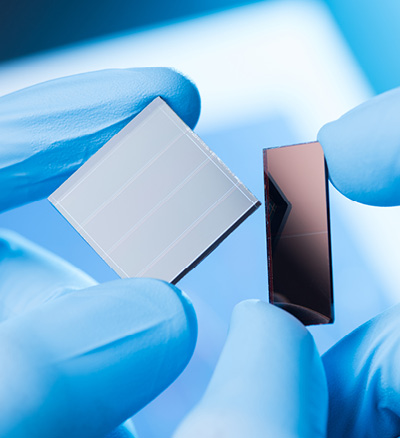
Coat perovskite, OPV, and tandem solar stacks — from a single lab cell toward roll-to-roll.

Defense
From radar-absorbing stealth layers to rugged sensors — uniform, traceable coatings for mission-critical systems.

MedTech and pharma
Sub-micron functional films for biosensors, microfluidics, drug delivery, and antimicrobial surfaces.

Carbon capture & DAC
Coat sorbent, MOF, and membrane layers for direct air capture and CO₂ conversion.
Fuel cells and electrolyzers
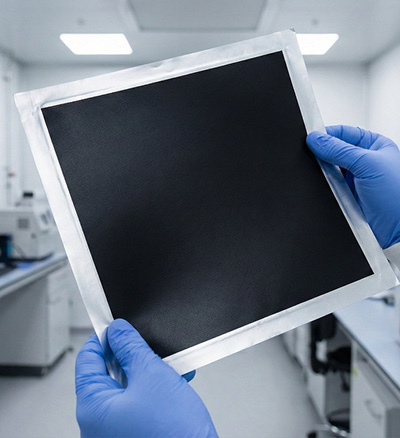
Coat catalyst and membrane layers evenly — cutting the precious-metal waste that drives cost per watt.

Advanced materials science
Uniform films for SAXS/WAXS/GIWAXS and synchrotron studies — built for in-situ structural characterization.
Printed electronics
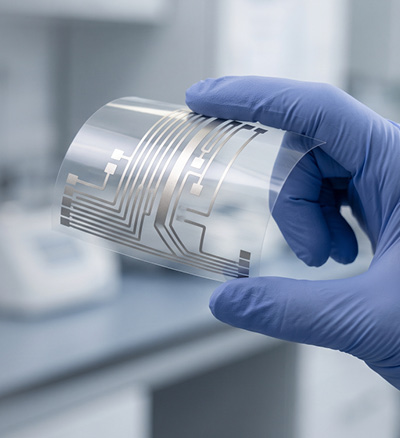
High-precision films for LEDs, OLEDs, semiconductors, and sensors — flexible and wafer-based.
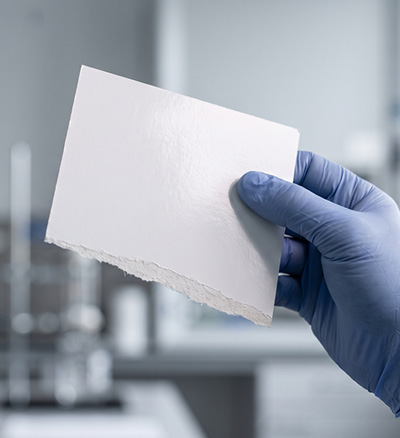
Paper and packaging
Barrier layers, membranes, and dissolvable films for sustainable, smarter paper packaging.
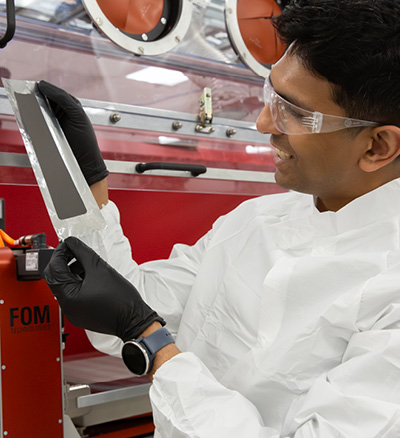
Test your material
Our Science & Learning team runs coating trials on your ink or slurry.
A solution for every stage of your research
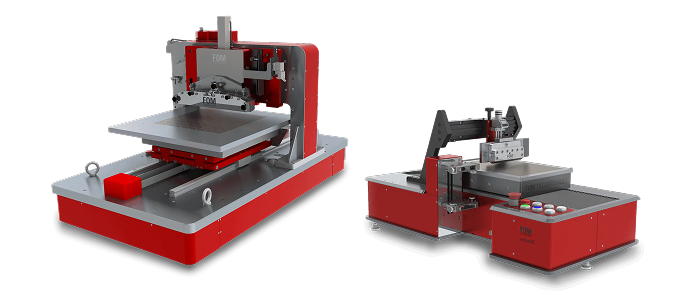
Sheet-based coating
Recipe development on small samples, with fast setup and minimal material use. Glovebox-ready for air- and moisture-sensitive materials.
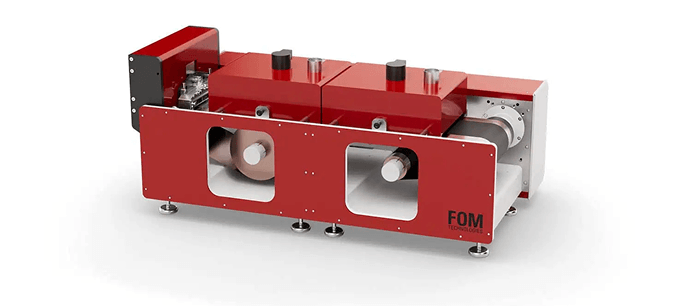
Lab-scale roll-to-roll
The bridge to continuous processing, using the same slot-die head. Longer substrates, controlled drying, and optional in-line metrology.
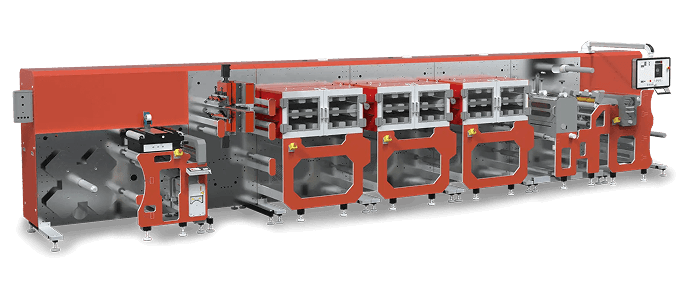
Pilot-scale roll-to-roll
Production-relevant widths and speeds, with modular options that keep your research open-ended. Build pilot data and de-risk manufacturing.
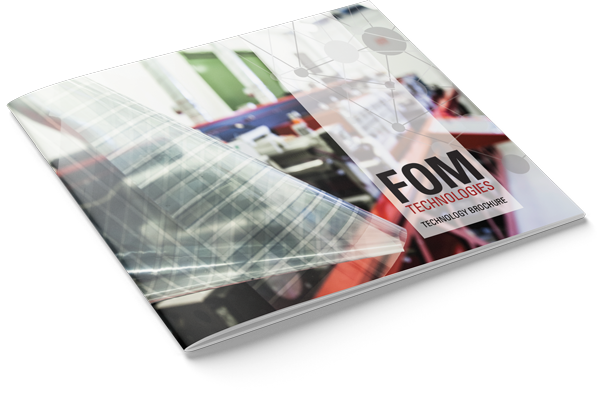
Get the slot-die coating technology brochure
Get to know slot-die coating. In this brochure you will get an introduction to slot-die coating, learn about film thickness control, film quality control, and find some of the R&D benefits of slot-die coating.